How the Timechain (or Blockchain) Works
Disclaimer: This is not an investment recommendation, just a suggestion to better study how Bitcoin works. ⚡

Blockchain, also known as timechain, is an innovative technology that has transformed the way data and transactions are recorded, stored, and verified. Its decentralized and highly secure structure provides transparency, reliability, and resistance to manipulation, making it one of the most important technological developments of the digital era.
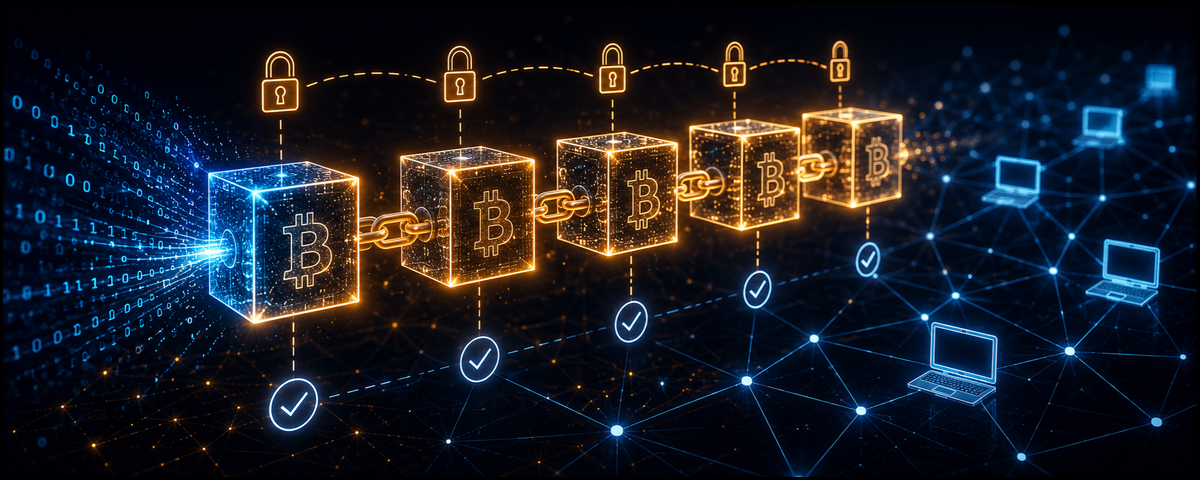
At its core, blockchain is a distributed digital ledger designed to record information in a chronological and immutable manner. The system is composed of blocks connected in sequence, with each block containing verified transaction data, timestamps, and a unique cryptographic identifier known as a hash. These blocks are permanently linked together, forming a continuous chain that preserves the integrity of all recorded information over time.
The term “timechain” emphasizes the chronological nature of the system, where each block is connected to the previous one in a way that creates a permanent historical record. Once data has been added to the chain, it cannot be altered without changing every subsequent block, which would require an unrealistic amount of computational power.
The validation process of blockchain transactions is commonly achieved through a mechanism known as Proof of Work. In this system, participants called miners use powerful computers to solve complex mathematical calculations. Once a solution is found, the new block is validated and permanently added to the chain. Every participating computer, or node, on the network then updates its copy of the ledger, ensuring that all records remain synchronized and transparent.
Each block generally contains verified transactions approved by the network, the hash of the previous block to maintain continuity and security, and a nonce, which is a specific number used during the mining process to generate the block’s unique hash. Together, these components create a secure structure that prevents fraud and unauthorized modifications.
One of the defining advantages of blockchain technology is decentralization. Unlike traditional systems that rely on central authorities or servers, blockchain distributes data across thousands of independent computers worldwide. This decentralized architecture eliminates the need for intermediaries, reduces operational risks, and strengthens overall system security.
Security and immutability are maintained through advanced cryptographic techniques. Any attempt to alter information within a block would immediately invalidate the connection between blocks and compromise the entire chain. Because of this, blockchain networks are considered highly resistant to fraud, censorship, and cyberattacks.
Transparency is another key characteristic of blockchain systems. All transactions recorded on the network are publicly verifiable, allowing anyone to audit the history of operations. At the same time, user privacy is preserved through the use of cryptographic digital addresses rather than personal identities. This balance between transparency and privacy makes blockchain both secure and adaptable across different use cases.
Although blockchain technology became widely recognized through cryptocurrencies such as Bitcoin, its applications extend far beyond digital finance. Blockchain is increasingly used in areas such as smart contracts, supply chain management, digital identity verification, asset registration, healthcare systems, and electronic voting platforms. Its ability to create permanent, transparent, and verifiable records enables more efficient and trustworthy systems across multiple industries.
For example, in supply chain operations, blockchain can record every stage of production and distribution, ensuring product authenticity and reducing the risk of fraud. In financial systems, it enables secure peer-to-peer transactions without requiring banks or payment intermediaries.
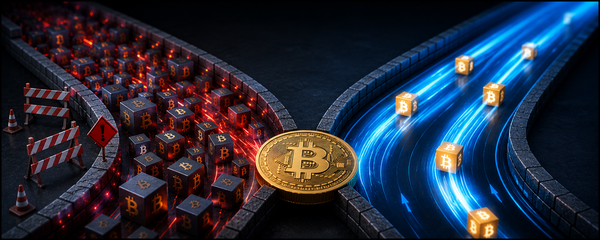
Despite its significant advantages, blockchain technology still faces challenges. Scalability remains one of the primary concerns, as growing networks require greater processing power and storage capacity. Regulatory uncertainty and global adoption also continue to influence the pace of development and implementation.
Overall, blockchain or timechain represents a revolutionary advancement in digital infrastructure. By combining decentralization, transparency, security, and immutability, it offers a new model for storing and transferring information in a reliable and tamper-resistant environment. As the technology continues to evolve, its impact is expected to expand across finance, business, governance, and many other sectors of society.