How Philosophy Was Born

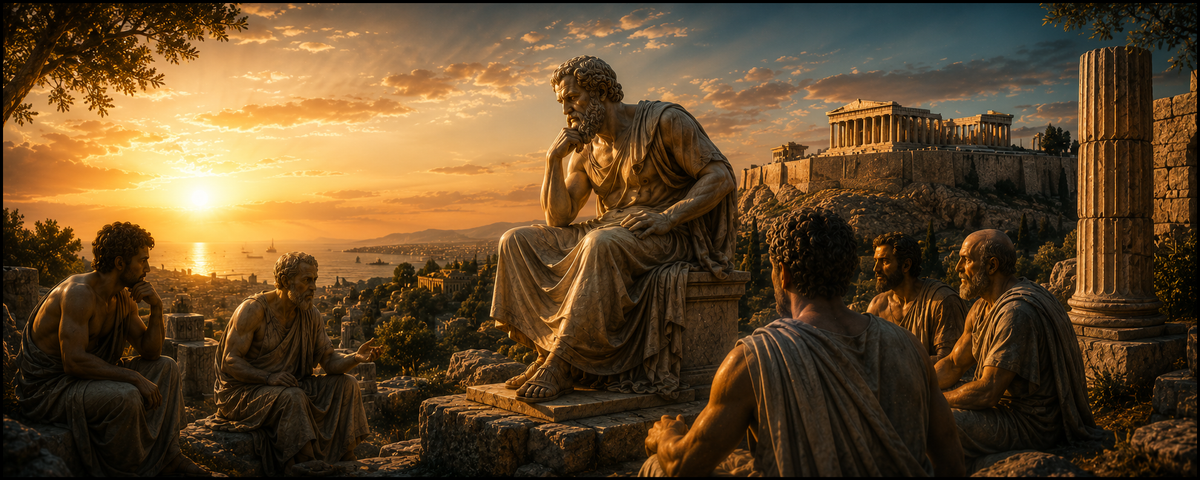
Philosophy emerged from humanity’s desire to understand existence beyond myths, traditions, and unquestioned beliefs. Long before formal systems of science or political theory existed, people attempted to explain the world through stories about gods, nature, destiny, and the origins of life. These narratives provided meaning and social structure, but over time, certain thinkers began searching for explanations grounded not only in tradition, but also in reason, observation, and logical inquiry. From this transition, philosophy was born.
The word “philosophy” is traditionally understood as the “love of wisdom.” From its earliest beginnings, philosophy was not limited to one subject or discipline. It sought to understand reality itself: the nature of existence, morality, knowledge, truth, justice, and the structure of society. Early philosophers asked questions that continue to influence human thought today. What is truth? What makes a life meaningful? How should societies be organized? What can human beings truly know?
The birth of philosophy marked a significant shift in the way people approached knowledge. Instead of accepting explanations solely through religious authority or inherited customs, philosophers began emphasizing rational thought and critical questioning. This did not necessarily mean rejecting spirituality or religion, but rather introducing the idea that human reason itself could be used as a tool for understanding reality.
Some of the earliest philosophical traditions developed around attempts to explain nature and the universe. Thinkers sought natural causes behind events such as storms, seasons, movement, and change. This was revolutionary because it represented one of the first major transitions from mythological explanations toward rational analysis. The search for order within nature eventually influenced the development of mathematics, astronomy, science, and political theory.
As philosophy evolved, it expanded beyond questions about nature into questions about ethics and human behavior. Philosophers began examining concepts such as virtue, justice, freedom, courage, and happiness. They explored what it means to live a good life and whether morality comes from laws, tradition, reason, or something deeper within human nature itself.
Political philosophy also emerged from these discussions. Thinkers started questioning power, authority, governance, and the role of the individual within society. Instead of viewing political systems as permanent or unquestionable, philosophy introduced the possibility that governments and laws could be examined critically and improved through reason and debate. Many modern ideas about democracy, rights, justice, and liberty were deeply influenced by these early philosophical discussions.
Another major contribution of philosophy was the development of logic and structured argumentation. Philosophers recognized that ideas needed to be examined carefully rather than accepted emotionally or impulsively. Through debate and reasoning, philosophy created methods for analyzing contradictions, testing assumptions, and building coherent systems of thought. This intellectual discipline became foundational not only for philosophy itself, but also for science, law, and education.
Throughout history, philosophy continued evolving across different cultures and traditions. Various civilizations explored questions about consciousness, ethics, spirituality, politics, and reality through their own perspectives and intellectual frameworks. Although these traditions differed in methods and conclusions, they shared a common goal: understanding the human condition and the world beyond appearances.
Philosophy also became deeply connected to personal reflection. Beyond academic theory, it encouraged individuals to examine their own beliefs, values, and assumptions. Philosophical thinking challenged people to move beyond passive acceptance and engage actively with questions about meaning, purpose, truth, and responsibility.
Even in modern society, philosophy remains present in everyday life, often without people realizing it. Debates about morality, freedom, justice, technology, identity, and human rights all contain philosophical foundations. Many of the assumptions that shape politics, economics, law, and culture originate from centuries of philosophical thought and debate.
The enduring importance of philosophy comes from its refusal to accept easy answers. It encourages curiosity, critical thinking, intellectual humility, and the continuous search for understanding. Rather than offering absolute certainty, philosophy teaches people how to question, analyze, and reflect more deeply about existence, society, and human nature itself.