5 Important Things to Study About Bitcoin
Disclaimer: This is not an investment recommendation, just a suggestion to better study how Bitcoin works. ⚡

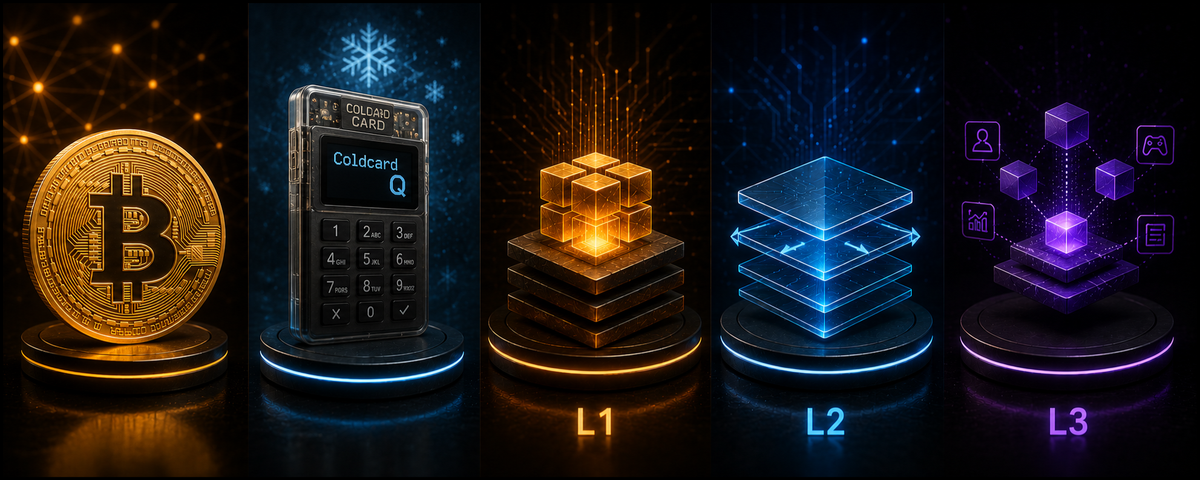
Bitcoin has grown far beyond the image of a simple internet currency. Over the years, it has become a technological, financial, and cultural movement that continues to influence discussions about money, privacy, decentralization, and digital ownership. For beginners, the ecosystem may initially appear complex, filled with technical terms and different layers of technology. However, understanding a few fundamental concepts is enough to build a solid foundation before exploring more advanced topics.
The first concept to understand is what Bitcoin actually is. Bitcoin is a decentralized digital currency designed to operate independently of banks, governments, or centralized institutions. Unlike traditional currencies that can be printed indefinitely, Bitcoin has a limited supply, which is one of the reasons many people compare it to digital gold. Beyond being used for transactions, Bitcoin is often viewed as a long-term store of value and a potential protection against inflation. Its decentralized nature means that no single entity controls the network, making it fundamentally different from the traditional financial system.
The second important topic is cold wallets. Security is one of the most essential aspects of owning Bitcoin, and cold wallets play a major role in protecting digital assets. A cold wallet, also known as a hardware wallet, stores Bitcoin offline rather than connected to the internet. Because of this, it offers significantly more protection against hackers, malware, and online attacks. Devices such as Jade and ColdCard are popular examples used by people who prioritize long-term security and self-custody. Understanding how to safely store Bitcoin is often considered just as important as understanding how to buy it.
The third concept is Layer 1, commonly referred to as the Bitcoin blockchain itself. This is the foundational network where transactions are permanently recorded and verified. Layer 1 prioritizes security, transparency, and decentralization above everything else. Every transaction added to the blockchain becomes part of an immutable public ledger that cannot easily be altered or manipulated. Although the system is extremely secure, transaction speeds and fees may vary depending on network activity and congestion. Studying Layer 1 helps explain why Bitcoin is trusted as a secure monetary network.
The fourth important area is Layer 2 solutions, especially the Lightning Network. As Bitcoin adoption increased, the need for faster and cheaper transactions became more evident. The Lightning Network was created to solve this limitation by enabling instant payments with very low fees while still using Bitcoin as the underlying asset. Layer 2 technologies make Bitcoin more practical for everyday transactions such as small purchases, online payments, and rapid transfers between users. Wallets like Wallet of Satoshi, Get Alby, and Blink became popular tools for interacting with the Lightning Network because they simplify the experience for beginners.
The fifth concept is Layer 3, which represents a newer stage of development built on top of Bitcoin infrastructure. Layer 3 explores more advanced applications such as smart contracts, decentralized platforms, gaming systems, and additional financial tools connected to Bitcoin. It reflects the growing ambition to expand Bitcoin beyond simple payments and value storage into a broader digital ecosystem. However, for newcomers, Layer 3 can feel significantly more technical and complex. For that reason, many people prefer to first understand Bitcoin itself, wallet security, and transaction layers before moving into more experimental technologies.
Together, these five topics create a strong introduction to the Bitcoin ecosystem. Understanding Bitcoin itself, learning how to secure assets properly, and studying how the different layers operate provides a clearer perspective on why Bitcoin continues to attract attention worldwide. While the technology continues to evolve, the core principles remain centered around decentralization, security, ownership, and financial independence. For beginners, focusing on these foundations is often the best way to approach the subject with confidence and clarity.